

How to Evaluate a Property Without Getting Distracted by Interiors
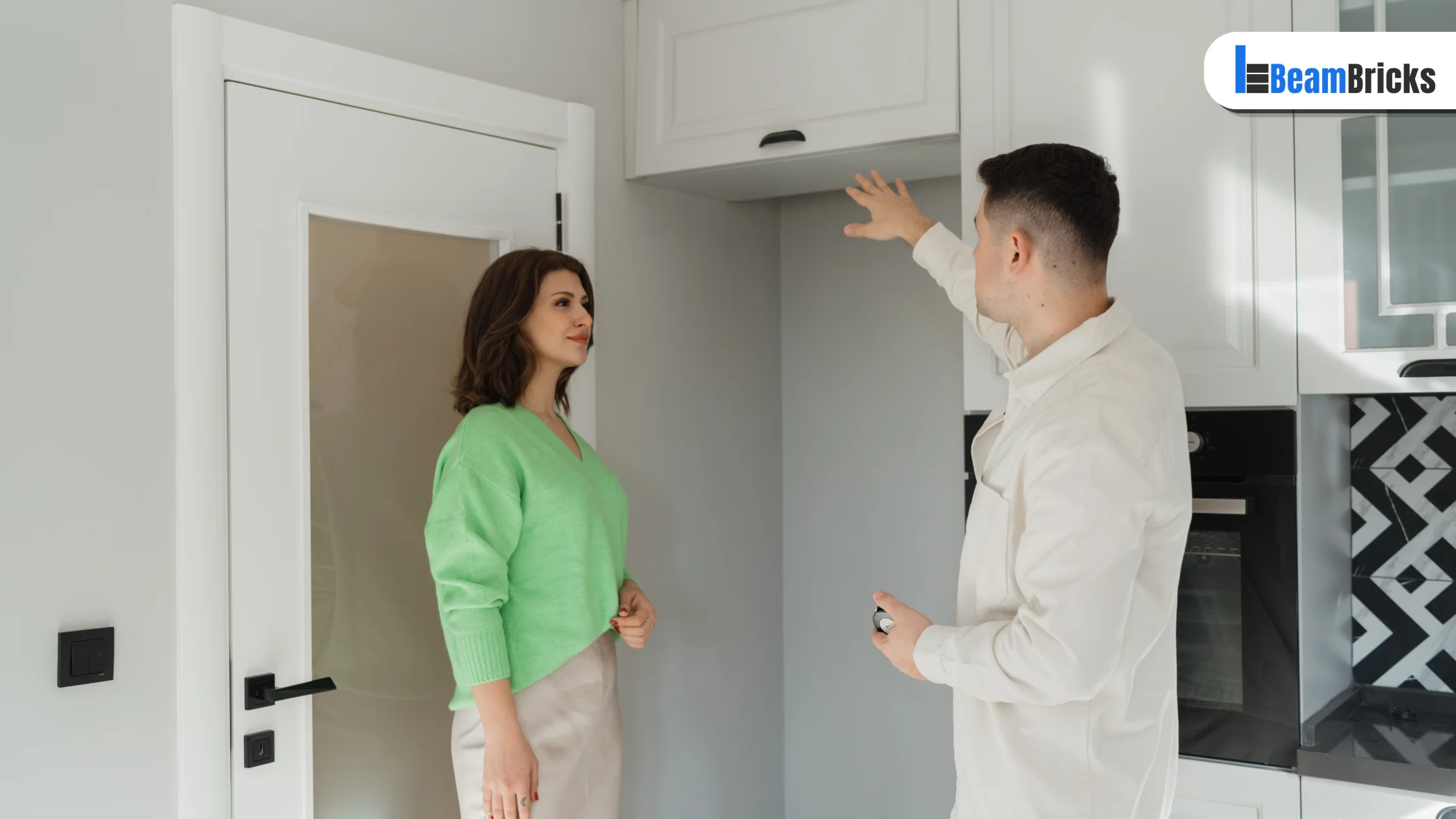
A beautifully designed home can make a strong first impression. That is exactly – why buyers need to be a little careful when evaluating a property.
A fresh coat of paint, stylish furniture, designer lighting, a modular kitchen or an impressive false ceiling can make a property feel ready to buy. There is nothing wrong with liking those things. The problem starts when attractive interiors make us overlook the parts of a property that are much harder or impossible – to change.
When evaluating a property – look beyond the interiors and assess the location, layout, usable space, construction and condition, natural light and ventilation, parking, surroundings, total cost, documentation and how well the property fits your current and future needs.
In other words:
Don’t ask only,“Do I like this house?”
Also ask:
“Does this property actually work for me?”
That small shift can make property buying much more rational without taking the human element out of it.
Quick Answer: How Should You Evaluate a Property?
Before getting influenced by interiors, evaluate a property in this order:
- Your requirements — budget, location, property type, size and essential features.
- Exact location — access, surroundings, roads, noise, convenience and connectivity.
- Layout and usable space — room sizes, movement, storage and practical use of space.
- Natural light and ventilation — window placement, openings and surrounding buildings.
- Construction and condition — visible quality, age, maintenance and signs that need further inspection.
- Parking and accessibility — actual parking, vehicle access, stairs, lifts where applicable and everyday convenience.
- Total cost — asking price plus relevant purchase, renovation and ownership costs.
- Documents and ownership — information that should be independently verified before proceeding.
- Future suitability — whether the property will continue to work for your family and plans.
Only after these fundamentals make sense should interiors become a major part of the decision.
And yes, interiors still matter. They can save renovation time and money and can make a home more comfortable. They just shouldn’t make the decision for you.
Why Beautiful Interiors Can Influence Property Buyers So Quickly
Property buying is not purely a spreadsheet exercise.
“You walk into a house, see a well designed living room, imagine your furniture in it, picture family gatherings, & suddenly the property feels familiar.”
That’s normal.
Good interiors create an emotional response. Property sellers and marketers also understand that presentation matters, which is why photographs, staging, lighting and renovations can have such a strong effect on how a property is perceived.
But presentation and suitability are two different things.
A property can be:
- Beautiful but poorly located
- Expensively renovated but impractical in layout
- Well furnished but short on usable space
- Newly painted but in need of other maintenance
- Visually impressive but outside your sensible budget
The reverse can also happen.
An older or simply furnished property may have an excellent location, sensible floor plan, good natural light and other characteristics that make it worth considering.
So the goal isn’t to ignore what you see.
It’s to look past the first impression before making a judgement.
1. Start With Your Requirements, Not the Interiors
Before evaluating the property itself, evaluate whether it matches what you need.
This sounds obvious, but it is surprisingly easy to forget during a site visit.
Suppose you started your property search looking for a 3 BHK within a particular budget and location range. You visit a beautifully renovated property that is slightly beyond your budget.
The interiors are excellent.
You start thinking, “Maybe I can stretch the budget.”
That is exactly when you should pause.
Ask yourself –
- Does the property fit my budget comfortably?
- Is the location suitable?
- Is the size sufficient?
- Does the layout work for my family?
- Is the property type right for me?
- Does it meet my essential requirements?
- Am I changing my requirements because I genuinely need to, or because I like this particular property?
Your requirements should be the filter.
The interiors should be one of the factors you evaluate after the filter.
For a deeper look at this approach, see Why Your Property Search Should Start With Your Requirements, Not Listings.
2. Evaluate the Exact Location Before Falling for the House
A property’s interiors can change.
Its location cannot.
This is one of the simplest principles to remember when buying residential property.
Two houses can be in the same broad locality but have very different surroundings & day-to-day experiences.
Look beyond the locality name and consider:
- Exact road and access
- Road width
- Traffic
- Noise levels
- Nearby commercial activity
- Parking conditions around the property
- Distance from everyday conveniences
- Schools and healthcare access
- Public transport and connectivity
- Surrounding construction and development
- Overall residential environment
For example, buyers looking at property in Sainik Colony, Faridabad may find that properties within the same locality differ considerably in their exact surroundings and access.
The locality is important. The specific location within it matters too.
You can use the Property in Sainik Colony, Faridabad guide as a starting point for understanding the locality, but individual properties still need to be assessed on their own merits.
A useful question to ask
“If the interiors were completely different – would I still want this location?”
If the answer is yes, you’re evaluating the property more objectively.
3. Look at the Layout Before Looking at the Décor
This is particularly important with builder floors, independent houses and other individual residential properties.
A good interior designer can make almost any room photograph well.
But furniture cannot change the underlying floor plan.
Look at:
- Room dimensions
- Placement of bedrooms
- Living and dining arrangement
- Kitchen position
- Bathroom access
- Balcony placement
- Storage
- Passage and circulation space
- Door and window positions
- Privacy between rooms
- How the spaces connect with one another
Now imagine the property without its furniture.
Would the layout still work?
Imagine your own furniture inside it.
Would you be able to arrange it comfortably?
Imagine your family using the house on an ordinary weekday.
Would the movement through the home make sense?
These questions are often more revealing than whether the living room looks impressive.
If you’re specifically evaluating builder floors, you can explore Builder Floors in Sainik Colony and the more focused 2 BHK Builder Floors in Sainik Colony or 3 BHK Builder Floors in Sainik Colony guides.
4. Judge Space by Usability, Not by Appearance
A wide angle photograph can make a room look spacious.
A large sofa can sometimes make a smaller room feel “more luxurious.”
And clever furniture placement can hide awkward corners.
This is why buyers should understand what the stated area actually represents.
Depending on the property, you may come across terms such as:
- Carpet area
- Built-up area
- Super built-up area
- Plot area
- Covered area
- Saleable area
These measurements aren’t interchangeable.
When comparing properties – understand what area is being quoted and, more importantly, think about how much space you can actually use.
For example, two properties may have similar advertised areas but feel very different – because of their floor plans, room dimensions, circulation space and storage.
During a visit, ask yourself:
Where will my bed go?
Where will I keep wardrobes?
Where will the dining table fit?
Is there enough storage?
Is the passage taking up space that could otherwise be useful?
These sound like small questions.
They aren’t.
They turn an abstract number into a real living experience.
5. Check Natural Light and Ventilation Without Being Distracted by Artificial Lighting
Good interiors often use lighting very effectively.
That’s great for the home.
But don’t confuse decorative or artificial lighting with natural light.
During a property visit, pay attention to:
- Window size and placement
- Number of openings
- Cross ventilation
- Direction of openings
- Nearby buildings
- Obstructions outside windows
- Privacy
- Air movement
- How naturally lit the rooms actually are
If possible – consider the time of day when you’re visiting.
A property that looks bright under artificial lights may feel quite different at another time.
Similarly, a property with fewer decorative features but good natural light and ventilation may be more comfortable in everyday use.
This is one area where experiencing the property matters more than looking at photographs.
6. Separate Cosmetic Condition From the Overall Condition of the Property
Fresh paint can make an older property look new.
New lights can make a room feel more modern.
A renovated kitchen can become the visual centre of the home.
But cosmetic improvements don’t automatically tell you about the property’s overall condition.
Look for visible signs that may require closer attention, such as –
- Dampness or moisture marks
- Cracks that need assessment
- Water-related issues
- Flooring condition
- Doors and windows
- Plumbing fixtures
- Electrical fittings
- Signs of poor maintenance
- Age of the construction
- Quality and condition of renovations
This doesn’t mean a buyer should attempt to diagnose structural or technical problems personally.
If something concerns you, get an appropriately qualified professional to inspect it.
The important point is simply this –
A property can be beautifully renovated and still require careful evaluation.
And an older-looking property may have been well maintained.
Don’t let paintwork answer questions about construction.
7. Check Parking and Everyday Accessibility
Parking is easy to overlook when you’re admiring a house.
Until you come home every day.
Then it becomes very important.
Check:
- Is dedicated parking available?
- What type of parking is it?
- Is the space actually usable for your vehicle?
- Is vehicle entry and exit convenient?
- Is the approach to the property practical?
- Are there accessibility considerations for elderly family members?
- If the property is on an upper floor, how convenient is access?
- Are stairs or a lift involved?
Don’t rely only on a photograph showing a car somewhere near the property.
Understand the actual parking arrangement and access.
A beautiful home should also work on an ordinary Tuesday morning when everyone is leaving for work, school or other commitments.
8. Look at the Surroundings, Not Just the Four Walls
When you enter a property, your attention naturally goes inside.
- Take a moment to step outside.
- Look around.
- Listen.
- Observe.
- What is happening on the street?
- What is next to the property?
- What is behind it?
- Is there ongoing construction nearby?
- How busy is the road?
- What does the surrounding residential environment feel like?
This becomes particularly important when comparing properties.
A slightly less impressive home in a better-suited setting may deserve more consideration than a beautifully decorated home in surroundings that don’t work for you.
The property is not just the building.
The environment around it is part of the buying decision too.
9. Don't Let Interiors Decide Whether the Price Makes Sense
This is where emotional decision-making can become expensive.
You see:
- Premium flooring
- A modern modular kitchen
- Designer wardrobes
- Imported-looking fixtures
- Expensive lighting
- A beautifully furnished living room
And you think:
“This property must be worth more.”
Maybe.
But the interiors alone don’t establish the property’s value.
When evaluating the asking price, consider the broader picture:
- Exact location
- Property type
- Size and relevant area
- Layout
- Construction and condition
- Parking
- Age
- Surroundings
- Comparable properties where reliable information is available
- Potential renovation or immediate expenses
- Other relevant transaction costs
The right question isn’t:
“Does this property look expensive?”
It’s:
“Does the overall property make sense at this price for what I am getting?”
A good interior may add convenience and reduce your renovation work. That has value.
But it shouldn’t stop you from evaluating everything else.
10. Consider What You Can Change — and What You Cannot
This is perhaps the simplest framework for evaluating a property.
Usually easier to change
Depending on the property and budget:
- Paint
- Lighting
- Curtains
- Furniture
- Décor
- Some fixtures
- Certain finishes
- Some aspects of the kitchen or storage
Much harder or impossible to change
- Locality
- Exact location
- Road access
- Basic floor plan
- Plot dimensions
- Orientation and openings
- Surrounding development
- Relationship with neighbouring properties
- Major structural characteristics
That doesn’t mean every “unchangeable” factor is automatically good or bad.
It means they deserve attention because you cannot simply redesign them after purchase.
A useful rule:
Don’t pay a premium for something you don’t value – just because someone else has made it look impressive.
And another:
Don’t reject a property simply because its current décor isn’t your style if its fundamentals suit you.
The "Remove the Interiors" Test
Here’s a simple exercise you can use during a property visit.
Imagine the property is completely empty.
- No furniture.
- No curtains.
- No decorative lights.
- No wall panels.
- No artwork.
- No staged dining table.
- No designer sofa.
Now look at the property again.
Ask yourself:
Would I still consider it?
Then evaluate these nine things:
Factor | Question to Ask |
Requirements | Does it meet my essential needs? |
Location | Does the exact location work for me? |
Layout | Is the floor plan practical? |
Space | Is the usable space sufficient? |
Light & ventilation | Does the property get enough natural light and airflow? |
Construction | Is the condition satisfactory or worth further inspection? |
Parking | Is parking practical for my needs? |
Price | Does the overall property justify the asking price? |
Future needs | Will it continue to work for me? |
If the property still looks attractive after removing the décor from your mental picture, you’re probably looking at the property itself rather than just its presentation.
Should You Ignore Interiors Completely?
No.
That would be taking the idea too far.
Interiors can matter.
A well-maintained interior can mean:
- Less immediate renovation work
- Lower initial spending
- Better day-one usability
- More convenience
- A style that genuinely suits your family
- Existing features you would otherwise need to add
If two otherwise suitable properties are reasonably comparable, interiors can absolutely influence your decision.
The point is priority, not rejection.
Think of it this way –
Fundamentals determine whether a property deserves serious consideration.
Interiors can help determine how much you like living in it.
Those are different questions.
How to Evaluate a Property Without Getting Emotionally Attached
This is easier said than done.
A property is a major purchase, and imagining your life there is natural.
But try separating the visit into two stages.
Stage 1: Objective evaluation
Write down:
- Location
- Price
- Size
- Layout
- Parking
- Construction/condition
- Light and ventilation
- Surroundings
- Important concerns
- Requirements it meets
- Requirements it doesn’t meet
Stage 2: Personal preference
Then ask:
- Do I like the interiors?
- Do I like the look and feel?
- Would I enjoy living here?
- Do I like the finishes?
- Would I keep the existing décor?
This separation is surprisingly helpful.
You can like a property and still identify its weaknesses.
You can dislike its décor and still recognise that the property itself deserves consideration.
That is a much healthier way to approach property comparison.
What About an Older Property With Better Fundamentals?
This is a situation buyers encounter quite often.
Imagine two properties.
Property A has modern interiors, newer furniture and a recently renovated appearance.
Property B looks dated but has a location, layout and space that better match your requirements.
It is tempting to immediately choose A.
But the right answer depends on the buyer.
Ask:
- What would renovation cost for B?
- How long would it take?
- Which property has the more suitable layout?
- Which location works better?
- What condition is the underlying property in?
- Are there issues that cannot easily be fixed?
- What is the total cost after accounting for relevant improvements?
Sometimes the dated property may be worth further consideration.
Sometimes the renovated property may genuinely make more sense.
The important thing is to compare the properties, not just their décor.
A Better Way to Compare Properties
If you are considering multiple homes, don’t rely on memory.
After each site visit, record the same information.
For example:
Factor | Property A | Property B |
Location | ||
Asking price | ||
Size | ||
Layout | ||
Natural light | ||
Ventilation | ||
Construction/condition | ||
Parking | ||
Surroundings | ||
Renovation required | ||
Key concern | ||
Future suitability |
Then separately record:
What did I like about the interiors?
This prevents a beautifully decorated property from winning the comparison simply because you remembered it more vividly.
For a more detailed comparison framework, read How to Compare Two Residential Properties Before Buying.
How BeamBricks Thinks About Property Evaluation
At BeamBricks, the approach starts with a simple idea:
We don’t sell properties. We filter them for you.
That means the starting point should be the buyer’s requirement, not whichever property happens to create the strongest first impression.
For a buyer searching in Faridabad, that could mean understanding:
- Preferred locality
- Budget
- Property type
- Size
- Family requirements
- Parking
- Construction preference
- Other practical priorities
The purpose of filtering isn’t to tell a buyer what to purchase.
It is to help reduce irrelevant choices so that the buyer can spend more time evaluating the properties that actually fit.
That distinction matters.
A property search should not become a competition between attractive photographs.
It should become a process of finding suitable options and evaluating them properly.
The 5-Minute Property Evaluation Framework
If you want something simple to remember during a site visit, use this sequence –
1. Fit
Does it meet my requirements?
2. Location
Does the exact location work for my daily life?
3. Space
Is the layout and usable space practical?
4. Condition
What am I actually buying beyond the cosmetic finish?
5. Cost
Does the overall property make sense at the total cost?
Then ask one final question:
“If the interiors were average, would I still want this property?”
If the answer is yes, you’ve probably evaluated more than just the décor.
Final Takeaway
A property is much more than what you see in the first few minutes of a site visit.
Interiors can create a “strong emotional reaction.” They can also add genuine convenience and value. But they are only one part of the property.
Before deciding, look at the things that are harder to change:
Location. Layout. Usable space. Natural light. Ventilation. Construction. Parking. Surroundings. Price. Documentation. Future suitability.
Then come back to the interiors.
If you still like the property, that’s useful information.
If you don’t, that’s useful too.
The goal isn’t to remove emotion from property buying. It is to make sure emotion doesn’t do all the evaluating.
FAQs: Evaluating a Property Before Buying
Evaluate the property against your requirements first - then assess the exact location, layout, usable space, natural light and ventilation, construction and condition, parking, surroundings, asking price, relevant documents and future suitability. Interiors should be considered as one factor - rather than the sole basis for the decision.
Start by confirming that the property meets your essential requirements. Then look at its - "exact location, layout, usable space, natural light, ventilation, condition, parking & surroundings." Once these fundamentals make sense, evaluate the interiors and finishes.
Interiors can be an important consideration - especially if they reduce renovation work or suit your lifestyle. However, buyers should also evaluate location, layout, space, construction, parking, price and other fundamentals - before making a decision.
Try to evaluate the property without focusing on - furniture, décor and artificial lighting. Look at the location, floor plan, usable space, natural light, ventilation, construction condition, parking, surroundings and price. If the property still makes sense after considering these factors - its appeal is based on more than presentation.
Location and interiors serve different purposes. Location is a fundamental characteristic that cannot normally be changed after purchase, while interiors can often be modified. The relative importance depends on the buyer's - requirements, budget & priorities.
Write down your requirements and evaluation criteria - before visiting properties. During the visit, assess each property using the same criteria and record both advantages & concerns. Separating objective evaluation from personal preferences can help prevent attractive interiors from dominating the decision.
Factors such as - the exact location, surrounding environment, road access, plot dimensions and basic floor plan are generally much harder to change than paint, furniture, lighting or décor. This is why buyers should pay particular attention to fundamental characteristics before being influenced by cosmetic features.
Compare both properties using the same criteria - location, price, size, layout, usable space, construction and condition, natural light, ventilation, parking, surroundings, renovation requirements and future suitability. Then evaluate the difference in interiors separately.
No. Renovation can improve appearance, convenience and usability - but it does not automatically make one property more suitable than another. Buyers should compare the - underlying location, layout, space, condition, price and other requirements alongside the quality and extent of renovation.
There is no single visual feature that establishes - whether a property is fairly priced. Consider its location, size and relevant area measurement, layout, construction and condition, parking, age, surroundings and comparable properties where reliable information is available. Also account for relevant purchase and potential renovation costs.
Ask questions about - the exact location, asking price, area measurement, construction age and condition, parking, floor, access, maintenance, available facilities and any other factor important to your requirements. For ownership and legal matters, request the relevant documents and have them independently verified by an appropriate professional before proceeding.
Use the same checklist for every property you visit. Record measurable or observable factors - such as price, size, layout, parking & condition separately from subjective preferences such as décor or interior style. This makes it easier to compare properties without letting one attractive feature dominate the decision.
Share: